

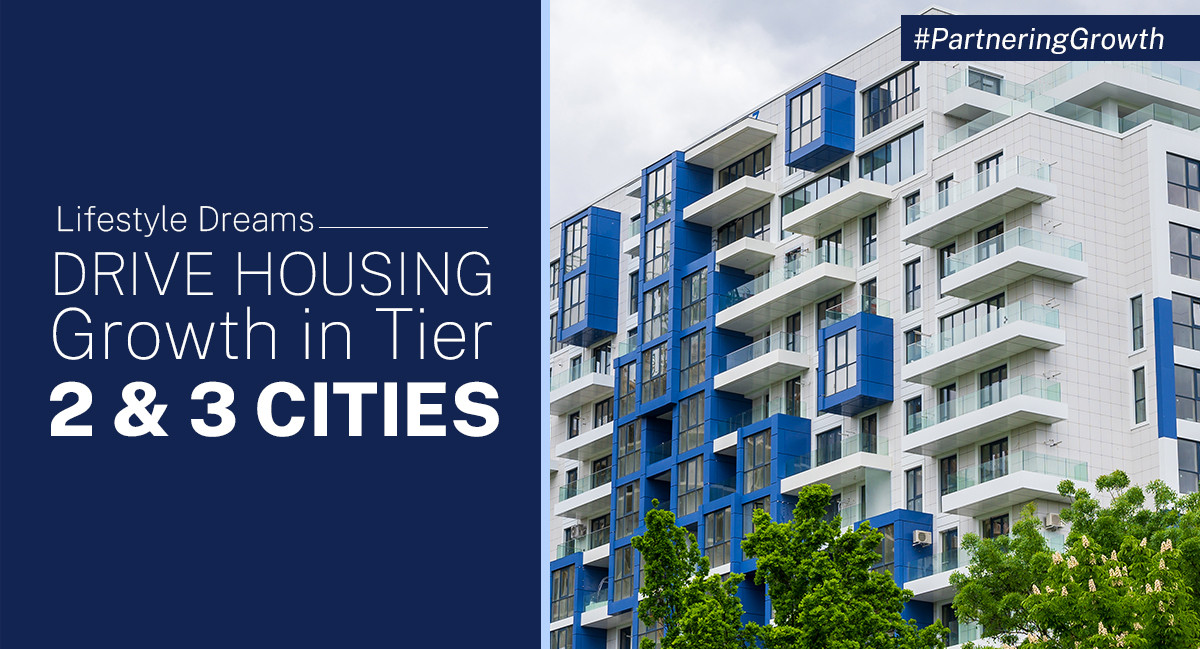
India’s urban landscape is undergoing a transformative shift. While metro cities like Mumbai, Delhi, and Bengaluru have long dominated real estate demand and investment, 2025 marks a new era where Tier 2 and Tier 3 cities are rapidly emerging as powerful growth engines for housing. Fueled by changing lifestyles, affordability, infrastructure development, and government reforms, these smaller cities are shaping the future of Indian housing markets.
The Shift to Tier 2 and Tier 3 Cities
Tier 2 cities like Pune, Indore, Surat, Lucknow, Jaipur, and Coimbatore, and Tier 3 cities such as Nashik and Bhubaneswar, are witnessing unprecedented housing demand. These cities account for 44% of land acquisitions by developers, reflecting investors’ confidence in their growth potential.
Residents and investors are drawn to these cities due to the balance they offer: urban conveniences coupled with lower living costs and less congestion compared to metros. Property prices in Tier 2 cities are generally 40-50% lower than in metro areas, allowing buyers to afford larger and better-quality homes.
Infrastructure and Connectivity Catalyse Growth
Government initiatives like the Smart Cities Mission, AMRUT, PMAY and the National Infrastructure Pipeline (NIP) under PM Gati Shakti envision investments exceeding ₹111 lakh crore, integrating logistics and connectivity upgrades across emerging urban clusters. Improvements in metro rail systems, ring roads, airports, logistics corridors, and public utilities enhance livability and boost real estate values.
Cities like Ahmedabad, Surat, and Jaipur have seen considerable infrastructure upgrades, facilitating both commercial and residential growth. Coimbatore’s airport cargo volume surged by 15% in 2025, reflecting increased economic activity, while Jaipur and Indore are attracting new global capability centres and start-ups.
Lifestyle & Remote Work Trends
The rise of remote and hybrid work models post-pandemic has reduced the dependency on metros for employment, prompting professionals to consider Tier 2 and 3 cities for a better quality of life. These cities offer less pollution, more green spaces, closer-knit communities, and growing social infrastructure such as schools, hospitals, malls, and co-working spaces.
This migration trend is also supported by digital penetration and expanded internet infrastructure, enabling seamless work-from-anywhere capabilities even in smaller cities.
Affordability Meets Aspiration
Mid-range and affordable housing remain the key drivers of demand in Tier 2 and 3 cities. Properties priced under ₹30 lakh and those in the ₹30-50 lakh bracket attract first-time homebuyers and investors alike. Luxury and ultra-luxury housing segments in these cities are also growing, driven by rising incomes and aspirations for premium lifestyles outside crowded metros.
Housing credit growth in Tier 2 and Tier 3 cities grew at a robust 18-20% CAGR during FY 24-25, significantly outpacing metro city growth, which was around 10-12% CAGR. Housing credit growth in India grew at a healthy rate of around 14% year-on-year in FY 2024-25 as per the RBI’s Trend and Progress of Banking report.
Cities like Pune lead in integrated township developments, offering high rental yields as compared to metro suburbs. The presence of NRIs investing up to 30% of their residential budgets in Tier 2 hotspots like Kochi and Pune underscores the cultural and economic pull of these emerging areas.
Economic and Employment Hubs
Tier 2 and 3 cities contribute significantly to India’s economic diversification. As per Niti Aayog’s recent report, nearly 50% of India’s registered MSMEs operate from these cities, generating employment and spurring consumption. Universities and technical institutes in these cities produce a growing talent pool, enabling the rise of start-ups and industrial hubs, thereby increasing housing demand from an expanding working population.
Tier 2 and Tier 3 cities across India are no longer peripheral players; they are the lifestyle and real estate growth engines of the future. With sustained infrastructure investments, government support, and rising aspirational middle classes, these cities are creating inclusive, affordable, and aspirational housing markets, turning lifestyle dreams into reality beyond the metros.

 Uploaded On:
  Author: