

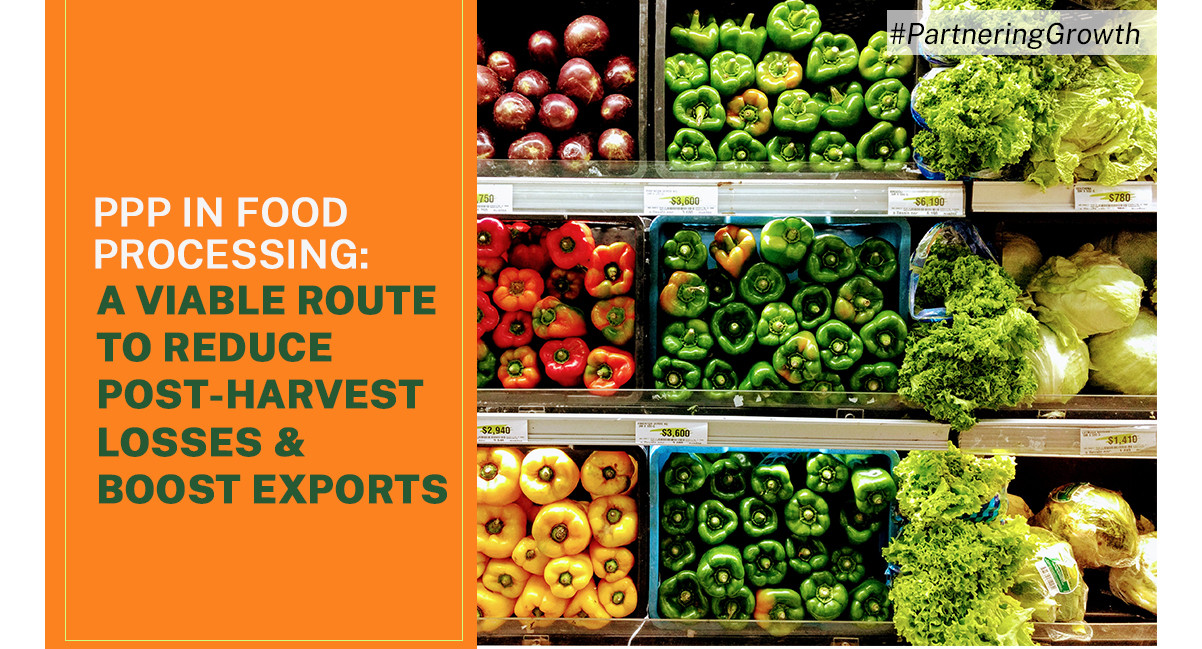
India’s food supply chain continues to face persistent post-harvest losses, most visible in fruits, vegetables, and other perishables. According to the Ministry of Food Processing Industries’ latest assessments, inadequate cold-chain integration and fragmented logistics remain the biggest structural gaps. These weaknesses create value erosion at multiple points: lower farm-gate realisations, higher consumer prices, and reduced throughput for processors.
What stands out is the economic ripple effect. Post-harvest inefficiencies depress rural incomes and prevent supply chains from contributing their full potential to national output. At a time when agri-processing already accounts for a growing share of India’s manufacturing GVA, these leakages hold back scale, competitiveness, and export readiness.
PPP as an Emerging Solution in 2025
Public-Private Partnerships have gained traction as a practical model to expand processing and logistics infrastructure. With renewed focus under MoFPI’s 2025 support programs, PPPs now extend into integrated cold chains, primary processing hubs, and agro-marine parks. These structures allow government entities to enable regulatory clarity and essential infrastructure while private operators drive technology adoption and operational efficiency.
Financial Viability, Risk Allocation & Cash-Flow Stability
From a financial standpoint, PPP structures allow early-stage risks—land preparation, utilities, approvals—to be absorbed on the public side, while performance and operational risks sit with private operators. This sharper demarcation improves bankability and creates more predictable cash-flow lives.
Reduced wastage improves cold-chain throughput, which in turn stabilises working-capital cycles for processors. Better forecasting of utilisation and revenue gives lenders clearer comfort, especially in long-tenure projects where repayment capacity hinges on asset performance rather than price volatility. In my view, this financial clarity is one of the strongest enablers for attracting institutional capital into food-processing infrastructure.
Export Momentum in 2025: Processing Capacity and Trade Competitiveness
India’s export performance in 2025 reinforces the importance of scaling value addition. According to APEDA’s latest data, agricultural and processed food exports rose 9% year-on-year to USD 7.99 billion in the April–July 2025 period. Demand was strong across rice, buffalo meat, fruits, and vegetables.
Momentum accelerated as FY26 progressed. Rice exports surged 33.18% in September 2025 to USD 925 million, taking April–September receipts to USD 5.63 billion, up 10% year-on-year. Broader trade performance also strengthened, with goods exports in Q2 FY26 (July–September 2025) reaching a record USD 209.9 billion.
With processed foods already forming 23.4% of the USD 25.14 billion APEDA export basket in FY25, stronger processing and cold-chain capacity directly support competitiveness. Higher value addition reduces rejection rates, improves shelf life, and aligns India with global quality expectations—especially important for high-growth categories like marine products, ready-to-eat foods, and minimally processed fruits.
Compliance, Controls, and Reporting Frameworks
PPP arrangements inevitably expand the compliance architecture. Revenue-sharing models, subsidy-linked performance obligations, and asset-handover requirements demand high-quality documentation and audit trails.
From a governance perspective, the need for performance audits, utilisation reporting, and transparent cost disclosures ensures accountability across the lifecycle. In my view, these requirements—though operationally demanding—strengthen investor confidence and reinforce regulatory oversight at a time when the sector is attracting larger pools of capital.
The Road Ahead: Infrastructure and Market Linkages
As India intensifies its focus on reducing post-harvest inefficiencies, PPP-driven infrastructure will play a central role. The next phase is likely to emphasise:
⦿ Digitised traceability to meet global compliance norms
⦿ Integrated multimodal logistics connecting production clusters to ports
⦿ Sustained capital formation in cold storage, reefer transport, and processing hubs
⦿ Stronger linkages with FPOs and cooperative-based aggregation models
From an economic standpoint, better infrastructure has the potential to unlock higher farm incomes, reduce systemic wastage, and improve India’s footprint in global value chains. The structural shift toward processed, compliant, and quality-assured exports is already visible—and PPPs can accelerate this transformation for the broader rural economy.

 Uploaded On:
  Author: