



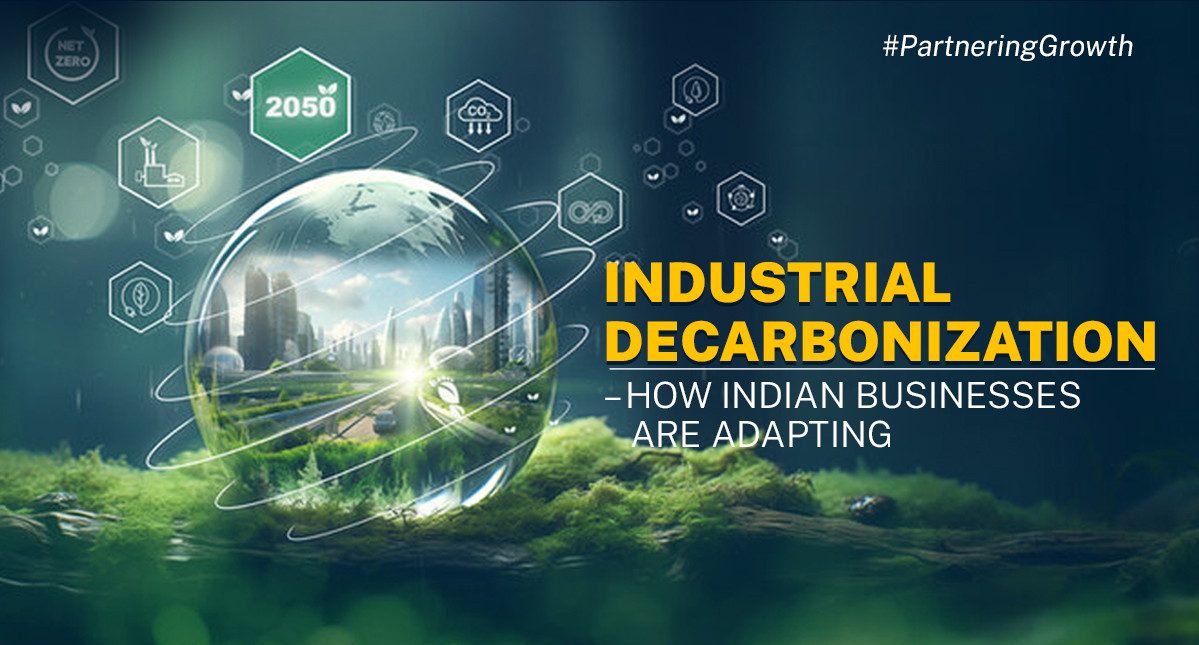
Industrial decarbonization in India is speeding up as businesses respond to national climate goals, stricter regulations, and higher stakeholder expectations.
Industrial decarbonization in India is speeding up as businesses respond to national climate goals, stricter regulations, and higher stakeholder expectations. Companies from different sectors are increasingly seeing decarbonization not just as a compliance issue, but as a way to improve competitiveness, drive efficiency, and ensure long-term resilience.
A major part of this change is the growing use of renewable energy. Many domestic industries are investing and developing their own solar & wind projects or entering power purchase agreements to lower their direct (Scope 1) and indirect (Scope 2) emissions.
National Green Hydrogen Mission The National Green Hydrogen Mission, launched by the Government of India in 2023, plays a key role in aiding hard-to-abate sectors like steel, cement, and fertilizers. This mission aims for the annual production of 5 million metric tonnes of green hydrogen by 2030, helping to replace fossil fuels in energy-intensive industrial processes.
Improving Energy Efficiency Improving energy efficiency is also a key focus of decarbonization strategies. The Government of India's Perform, Achieve, and Trade (PAT) scheme, managed by the Bureau of Energy Efficiency (BEE), encourages improvements in energy performance among large, energy-intensive industries. By upgrading to more efficient equipment, optimizing processes, and using technologies like waste heat recovery, Indian businesses are cutting down on energy consumption. The use of digital solutions, such as IoT sensors and AI-driven analytics, allows real-time monitoring and management of energy use.
The Adoption of Circular Economy Embracing circular economy practices is another growing trend. Many industries are optimizing raw material use, promoting recycling and reuse of industrial by-products, and focusing on materials with lower embodied carbon. In the textile industry, for example, stakeholders are moving towards sustainable fibers and closed-loop production systems, in line with new policy guidelines and global best practices.
Policy Support Supportive government policies and access to financing are crucial for this transition. Initiatives like the Production Linked Incentive (PLI) scheme for solar photovoltaic manufacturing encourage domestic clean-tech industries. Meanwhile, green financing and international climate funds help businesses invest in the costly decarbonization projects.
Conclusion Indian industries are making significant strides towards decarbonization by integrating renewable energy, improving energy efficiency, adopting circularity, and utilizing government support. Along with meeting the national commitments, these efforts will accelerate innovation, economic growth, and greater sustainability for Indian businesses.
References - Ministry of New & Renewable Energy, National Green Hydrogen Mission- Ministry of Power, India Energy Transition Updates, 2024- Press Information Bureau, Government of India: Green Hydrogen Mission, 2023- Bureau of Energy Efficiency, PAT Scheme Overview- Textile Exchange, "Preferred Fiber & Materials Report 2023"- Ministry of Finance, "Green Financing in India," 2024